The Departmentof Health Sciences is dedicated to delivering a comprehensive, interdisciplinary, and evidence-based education in contemporary healthcare, with a strong focus on Health Management, Casualty Management, Polytrauma Management, Disaster Prevention, and Remote Casualty Access, supported by the application of Artificial Intelligence (AI) in clinical and operational decision-making.
Through teaching, research, and professional engagement, the Department addresses the organisation, coordination, and delivery of healthcare services across routine, emergency, and disaster contexts. Academic programmes emphasise the strategic management of health systems, mass-casualty response, trauma care pathways, emergency logistics, and crisis leadership, ensuring graduates are prepared to operate effectively in complex, high-pressure environments.
A distinctive feature of the department's academic profile is the integration of AI-driven tools in casualty management and diagnosis. Students are trained in the use of data-supported triage systems, clinical decision-support algorithms, predictive analytics, and AI-assisted diagnostic technologies designed to enhance speed, accuracy, and consistency in emergency and trauma settings. Particular attention is given to the ethical, legal, and clinical governance considerations surrounding the use of AI in healthcare.
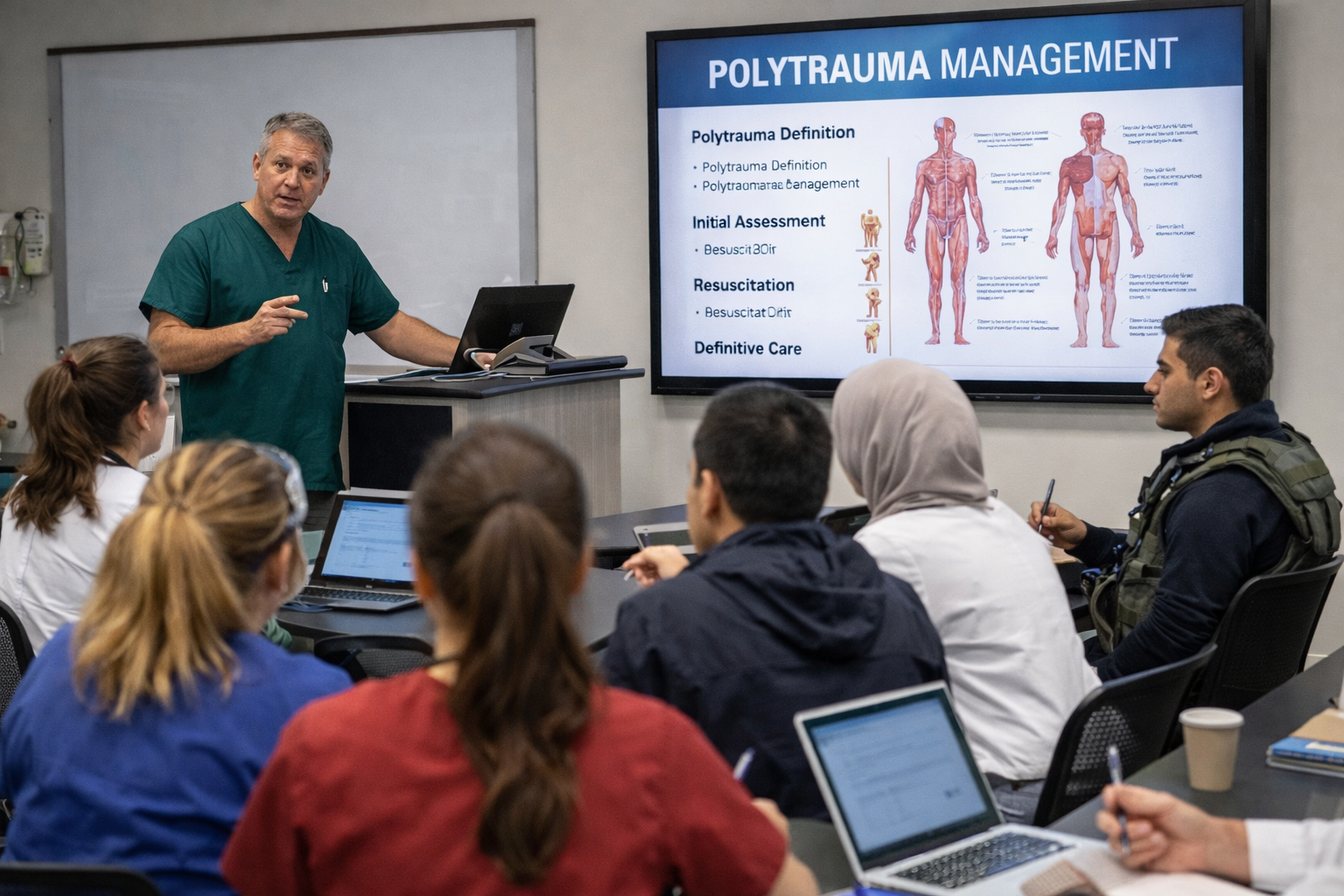
The department places strong emphasis on polytrauma management, including the assessment, prioritisation, and coordinated treatment of patients with multiple, life-threatening injuries. In parallel, significant focus is given to disaster prevention and preparedness, covering risk assessment, early-warning systems, emergency planning, and multi-agency coordination at local, national, and international levels.
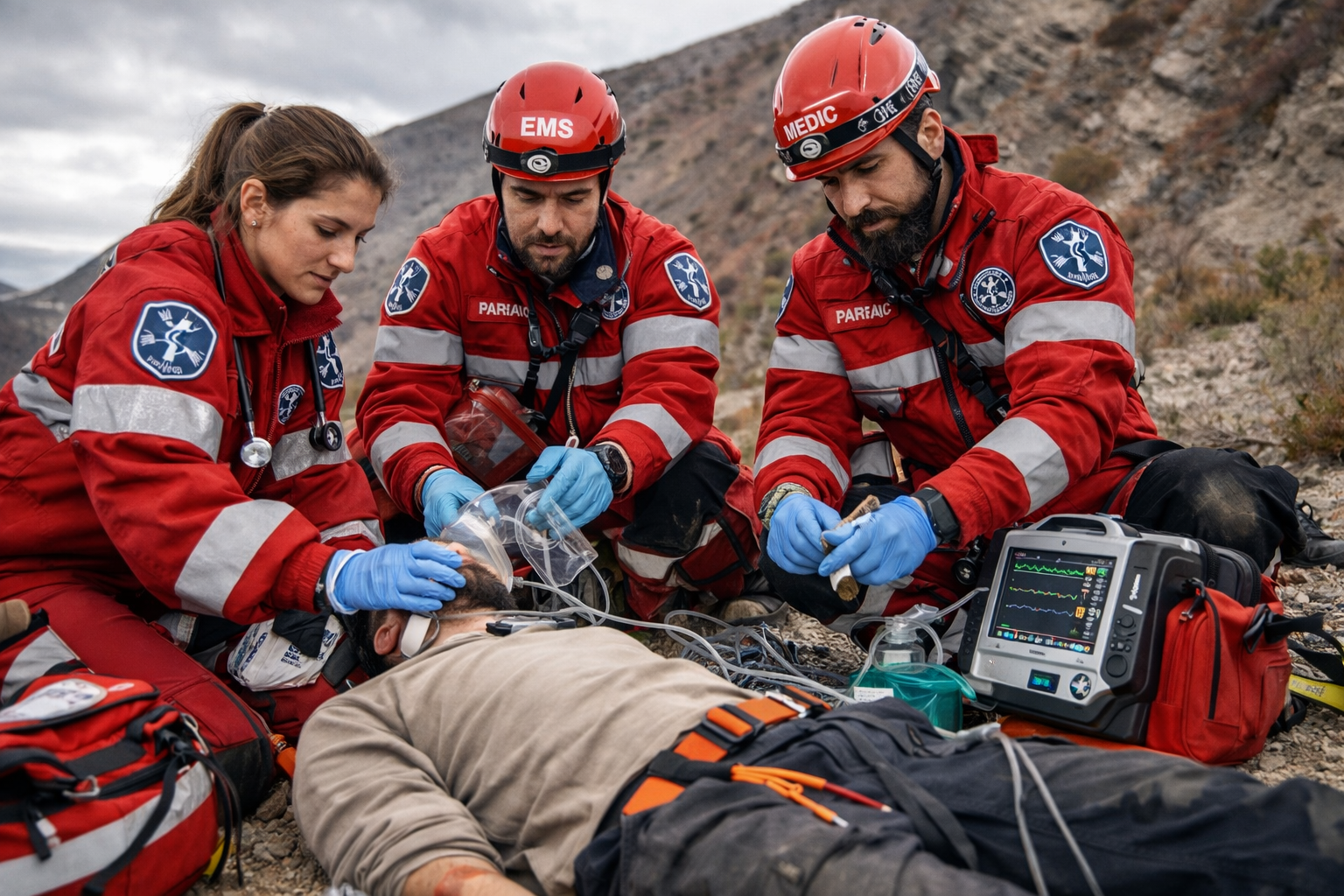
In response to evolving healthcare demands, the department advances education and research in remote casualty access and care, incorporating telemedicine, AI-supported remote diagnostics, digital triage platforms, and mobile health technologies to improve emergency response in geographically isolated, disaster-affected, or resource-limited environments.
All programmes are underpinned by a strong commitment to professional ethics, patient safety, evidence-based practice, and regulatory compliance. Graduates are trained to apply AI-enabled and conventional clinical tools responsibly, ensuring transparency, accountability, and patient-centred care.
By fostering analytical thinking, leadership capacity, and technological competence, the department prepares graduates to contribute meaningfully to healthcare management, emergency medical services, disaster response, digital health innovation, and health policy development. This integrated educational model ensures that graduates are equipped to strengthen the resilience, efficiency, and accessibility of modern healthcare systems.