
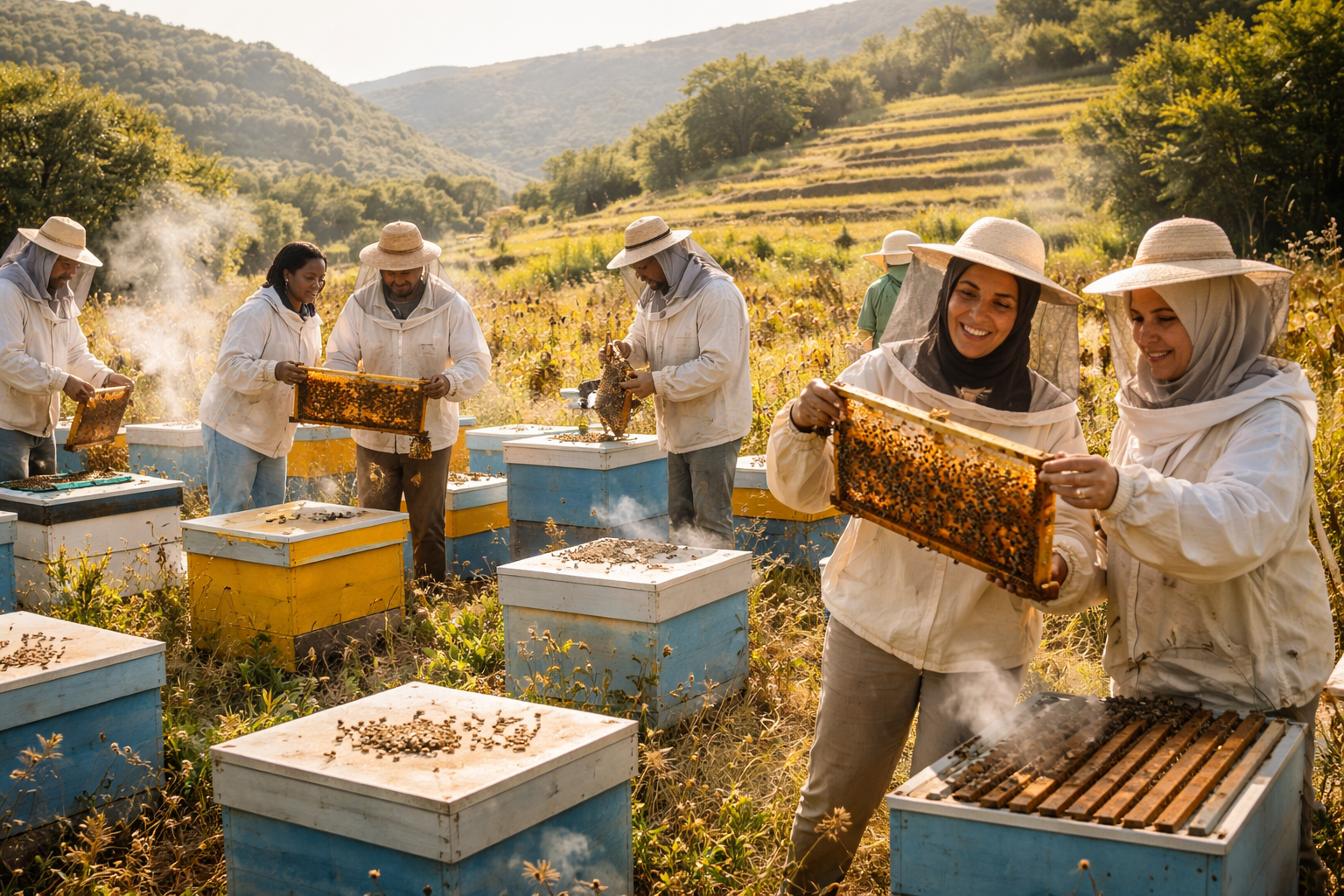

The Diploma in Indigenous Beekeeping and Sustainable Livelihoods is delivered by Pro Deo International University under the Faculty of Life Sciences. This programme builds on the foundations of community beekeeping introduced at the certificate level and develops them into advanced skills and leadership capacities. It equips participants to take on wider roles in promoting sustainable livelihoods, environmental protection, and cultural resilience within their communities. The course combines advanced hive and apiary management with training in cooperative development, small-scale enterprise, and value addition to bee products. It also highlights the relationship between beekeeping, biodiversity conservation, and climate change adaptation. Learners will take part in community-based fieldwork and applied research projects, integrating traditional indigenous knowledge with selected modern approaches. By the end of the programme, graduates will not only be competent beekeepers but also community leaders capable of training others, managing small enterprises, and linking beekeeping to both cultural and environmental sustainability.
Course Objectives
Course Structure
Target Audience
This diploma is intended for individuals and community groups seeking to deepen their practical, organisational, and leadership capacities in beekeeping as a foundation for sustainable livelihoods and environmental stewardship. It is particularly suited to practising beekeepers who have completed introductory or certificate-level training and wish to advance their technical skills, enterprise development, and community leadership roles, as well as members of indigenous and rural communities engaged in traditional beekeeping practices who aim to strengthen and sustain these traditions through structured learning and responsible innovation. The programme is also designed for women’s cooperatives, community entrepreneurs, small-scale farmers, agro-ecology practitioners, and forest-dependent communities interested in integrating beekeeping into diversified and resilient livelihood strategies. In addition, it is appropriate for community leaders, cooperative organisers, NGO staff, extension workers, and educators involved in food security, biodiversity conservation, climate change adaptation, and local economic development. The diploma is particularly relevant for learners committed to peer education, cooperative development, and community-based enterprise, and who seek to contribute actively to cultural continuity, environmental responsibility, and locally rooted economic resilience.
It is proposed that a compulsory practical training component be delivered in Muğla, Turkey, with a total instructional duration of five consecutive days. Participants will be required to enter Turkey via Istanbul Airport, followed by a scheduled domestic transfer to Muğla. The training programme will commence at the beginning of the working week and conclude at its end, after which participants will return to Istanbul for onward international travel. The delivery of this practical component is contingent upon a minimum enrolment of ten participants, a threshold deemed necessary to ensure financial and operational viability.
Accommodation will be arranged in accredited three-star hotels on a bed-and-breakfast basis. These facilities will be located in rural villages in close proximity to the designated apiary and training sites, thereby facilitating efficient access to practical learning environments. Throughout the duration of the programme, participants will be provided with organised ground transportation, including airport transfers, daily travel between accommodation and training locations, and transport to additional educational or site-visit venues as specified within the training schedule.